Fast delivery
.png)
 Fair prices




The use of marine plasma in the field of health and well-being is gaining popularity due to its numerous benefits for the body. The marine plasma, extracted from seawater, is rich in minerals, trace elements, and essential salts that can help balance and revitalize our biological system. However, when it comes to choosing between isotonic marine plasma and hypertonic marine plasma, it is important to understand the differences and implications of each option. This article will explore the distinct characteristics of isotonic and hypertonic marine plasma and provide you with the necessary information to make an informed choice based on your health needs and goals.
Isotonic or Hypertonic Marine Plasma: What are the Differences?
We only offer hypertonic marine plasma to allow you to save money by preparing isotonic marine plasma yourself, as it is essentially the same liquid, simply one is diluted, the other is pure.
What is called hypertonic marine plasma is simply pure seawater. The plasma has a higher concentration of salts and minerals than blood plasma. It is generally close to 33 g/L (grams per liter) but this figure can of course vary depending on many local parameters.
Isotonic marine plasma is a liquid that has been prepared as follows: 1 volume of hypertonic marine plasma is mixed with 2 to 3 volumes of fresh water.
The goal is to achieve a concentration of salts and minerals similar to that of human blood plasma. The dilution is generally done with distilled water or spring water to obtain a mineral salt concentration of about 9 g.
In the theoretical case where hypertonic plasma has a concentration of 33 g/L and you want to prepare isotonic plasma, here is the formula to use (Volume of hypertonic plasma = 1 L). In this case, Total Volume = (33 g/L * 1 L) / 9 g/L = 3.67 L.
To obtain 1 liter of isotonic solution, mix 1 liter of hypertonic marine plasma with 2.67 liters of distilled or spring water (3.67 L - 1 L = 2.67 L).

What is Hypertonic Marine Plasma?
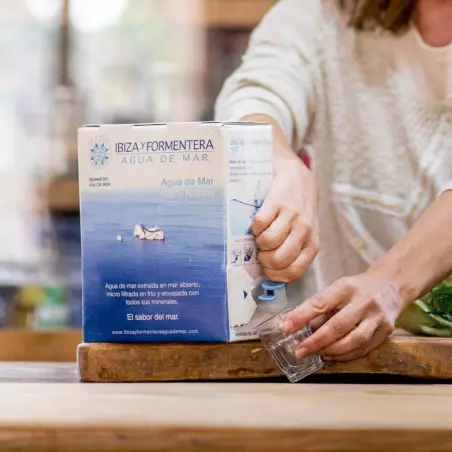
Hypertonic marine plasma is a term used to refer to seawater that is filtered but not diluted. Hypertonic Quinton water is often used as a base to prepare isotonic marine plasma, and this is of course the most cost-effective solution. By purchasing isotonic marine plasma, you have essentially outsourced the dilution and also paid for the transport of the fresh water used to dilute the seawater. By doing this dilution at home, you do not pay for these two expenses.
What is isotonic marine plasma?
This term is used to refer to marine plasma that has been prepared from hypertonic marine plasma simply by diluting it with ideally spring water, filtered water, or if not available, tap water, using a ratio of 1 part hypertonic seawater/seawater to 2.5 to 3 parts fresh water. For a more precise calculation, refer to the formula above. By making your isotonic marine plasma at home, you achieve significant savings.
What are the differences (benefits, usage, dosage…)?
The differences between the two types of marine plasma mainly lie in their concentration and their effects on the body.
We will differentiate two cases:
1. Internal use
It should be noted that in all cases, it is preferable to consume both upon waking on an empty stomach, ideally keeping them in the mouth for a minute to optimize their assimilation.
Hypertonic marine plasma: it is recommended to consume about one tablespoon per day. The benefits of hypertonic Quinton water include:
- Strengthening the immune system
- Support for the digestive system and nutrient absorption
- Stimulation of blood circulation
- Electrolyte rebalancing
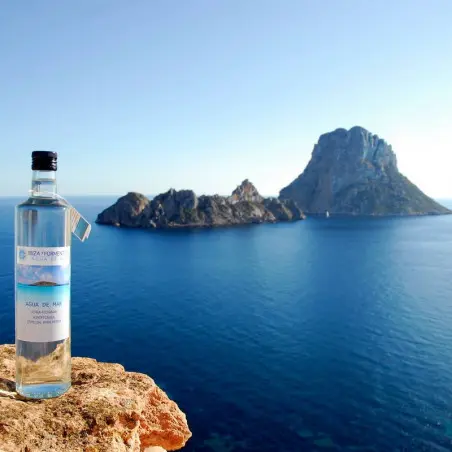
Hypotonic marine plasma: The usual recommended consumption is one-third to half a glass per day, but it can be adjusted according to individual needs. The benefits of hypotonic marine plasma include:
- Hydration and cellular rehydration
- Supply of minerals and trace elements
- Support for recovery after exertion
- Aid in detoxification
In summary, the differences between the two types of marine plasma mainly lie in their concentration and their effects on the body. The hypertonic is more concentrated and has more stimulating effects, while the hypotonic is less concentrated and is more suitable for hydration and remineralization.
2. External use
Hypertonic marine plasma:
It is more concentrated in salt and minerals, which can have a greater osmotic effect, drawing water from tissues and helping to reduce inflammation and edema.
It can be used to clean and disinfect wounds, thanks to its natural antibacterial and antiseptic action.
It can also be used to treat skin conditions such as eczema, psoriasis, and acne due to its anti-inflammatory and remineralizing properties.
Hypotonic Marine Plasma:
Being less concentrated in salt and minerals, it has a lesser osmotic effect and is therefore gentler on the skin.
It can be used to hydrate and soothe the skin, especially sensitive or irritated skin.
It also helps with cell regeneration and promotes the healing of wounds and burns.
Its use can help strengthen the skin barrier and prevent water loss.
In summary, hypertonic marine plasma has more stimulating and decongestant properties externally, while hypotonic has more hydrating and soothing properties.
FAQ: Isotonic or Hypertonic Marine Plasma?
Q1: What is the difference between isotonic and hypertonic marine plasma?
A: The main difference lies in the concentration of salts and minerals. Hypertonic marine plasma is undiluted, meaning it is pure seawater with a high concentration of salts, close to 33g/L. Isotonic marine plasma, on the other hand, is prepared by diluting hypertonic marine plasma with fresh water, resulting in a concentration similar to that of human blood plasma, about 9g/L. Thus, isotonic is less concentrated and gentler on the body.
Q2: How to prepare isotonic marine plasma at home?
A: To prepare isotonic marine plasma, simply mix 1 liter of hypertonic marine plasma with about 2.67 liters of fresh water (distilled or spring water). This dilution results in a solution with a mineral concentration close to that of human blood plasma.
Q3: What are the benefits of hypertonic marine plasma?
A: Hypertonic seawater, being more concentrated in salts and minerals, offers benefits such as strengthening the immune system, improving digestion, stimulating blood circulation, rebalancing electrolytes, and supporting the nervous system. It is recommended for internal use, usually in the form of a tablespoon per day, preferably on an empty stomach to maximize absorption.
Q4: What are the benefits of isotonic marine plasma?
A: Isotonic marine plasma, being more diluted, is ideal for hydration and cellular rehydration. It helps provide essential minerals and trace elements to the body while supporting recovery after physical exertion. It is also beneficial for detoxifying the body. The recommended consumption is generally one-third to half a glass per day.
Q5: Can marine plasma be used for external care?
A: Yes, both types of marine plasma can be used for external care, but their effects vary. Hypertonic marine plasma, due to its high salt concentration, has osmotic properties that help reduce inflammation and edema. It is also effective for disinfecting wounds and treating skin conditions such as eczema or psoriasis. Isotonic marine plasma, being gentler, is perfect for hydrating and soothing the skin and promotes the healing of wounds and burns.
Q6: Why choose to prepare your own isotonic marine plasma rather than buying it?
A: Preparing your own isotonic marine plasma can be more economical. When buying already diluted isotonic marine plasma, you pay not only for the liquid but also for the transport of the fresh water used for dilution. By preparing isotonic plasma at home, you only pay for the hypertonic marine plasma and the water, which allows for substantial savings.